Source vegan sulforaphane broccoli extract for Health Care, Medicine, Food
Find and compare 30 listings of vegan sulforaphane broccoli extract from verified Chinese suppliers. Buyers can review specifications, pricing, and shipping options for health care, medicine, and food applications.
Key considerations
Products List




Comprehensive Sourcing Guide
Strategic Sourcing Guide for Vegan Sulforaphane Broccoli Extract
Procuring high-quality vegan sulforaphane broccoli extract requires a rigorous understanding of botanical sourcing, chemical stability, and supply chain transparency. For buyers in the health care, food, and pharmaceutical sectors, the distinction between raw plant material and standardized extracts is critical. The market offers various forms, including powders derived from seeds and standardized extracts where the active ingredient, sulforaphane, is quantified. This guide outlines the essential parameters for evaluating suppliers, ensuring product integrity, and managing procurement risks without relying on unverified claims.
Technical Specifications and Chemical Standardization
The foundation of a successful procurement strategy lies in defining precise technical specifications. The core active compound, sulforaphane, is often derived from glucoraphanin, a precursor found in broccoli seeds. Buyers must distinguish between the raw powder and the standardized extract. In the current market, products are frequently categorized by their purity and concentration. Some listings indicate a standard of "100% pure powder," while others specify active ingredient concentrations such as 1%, 2%, or 5%. It is vital to verify whether the product is a raw glucoraphanin powder or a hydrolyzed sulforaphane extract, as the bioavailability and application differ significantly.
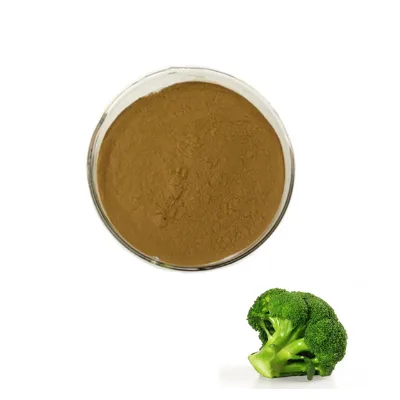
The physical state of the product is another critical specification. Typical observations for these extracts describe the material as a "green or light green powder" or a "light yellow or brown fine powder." The color variation often depends on the extraction method and the specific part of the plant used, such as the seed. Buyers should request a Certificate of Analysis (COA) that explicitly states the assay method used to determine potency. High-performance liquid chromatography (HPLC) is the industry standard for quantifying sulforaphane and glucoraphanin levels. While some sources may mention Thin Layer Chromatography (TLC) or UV methods, HPLC provides the necessary resolution for accurate potency verification in B2B transactions.
| Specification Parameter | Typical Observation | Verification Requirement |
|---|---|---|
| Active Ingredient | Sulforaphane / Glucoraphanin | Confirm specific compound via COA |
| Standardization | 1%, 2%, 5%, or 100% pure | Verify percentage against batch test |
| Physical State | Powder (Green/Light Green/Yellow) | Visual inspection and particle size data |
| Assay Method | HPLC, UV, TLC | Confirm HPLC is used for final release |
| Part of Plant | Seed | Verify botanical source documentation |
Compliance and Certification Verification
In the health and wellness sector, regulatory compliance is non-negotiable. Suppliers must demonstrate adherence to international quality management systems. Common certifications observed in the market include HACCP, FDA registration, and ISO standards. These certifications indicate that the facility operates under controlled conditions regarding hygiene, safety, and process management. Additionally, specific product certificates such as COA (Certificate of Analysis) and MSDS (Material Safety Data Sheet) are essential for shipping and regulatory clearance.
For buyers targeting the vegan market, it is crucial to verify that the extraction process does not involve animal-derived solvents or processing aids. While the product itself is plant-based, the manufacturing environment must be free from cross-contamination with non-vegan materials. The origin of the raw material also plays a role in compliance. Many extracts originate from regions like Shanxi or Shaanxi in China. Buyers should request documentation confirming the agricultural practices used at the source, ensuring that the "vegan" claim is supported by the entire supply chain, from seed cultivation to final packaging.
Cost Drivers and Pricing Structures
Understanding the cost structure of sulforaphane extracts helps buyers negotiate effectively and avoid market anomalies. The price of these products is influenced by several factors, including the concentration of the active ingredient, the purity of the extract, and the scale of the order. Market observations indicate a wide price range, from approximately $0.14 to $800 per unit, depending on the specification and packaging. Lower-priced items often correspond to raw powders with lower standardization, while higher prices reflect highly purified, standardized extracts with rigorous testing.
The Minimum Order Quantity (MOQ) is another significant cost driver. Standard MOQs in this sector often start at 1 kilogram, though some suppliers may offer samples ranging from 1 gram to 10 grams for evaluation. Bulk orders typically utilize packaging such as 25kg drums or aluminum foil bags, which can reduce the per-unit cost. Buyers should be wary of prices that seem abnormally low, as they may indicate substandard purity or a lack of proper testing. Conversely, extremely high prices without a clear justification in terms of standardization or certification may suggest inflated margins.
Typical Applications and Formulation Considerations
The versatility of sulforaphane broccoli extract makes it suitable for a diverse range of applications. The primary sectors include health care products, medicines, and food supplements. In the food industry, the extract is often used in functional beverages, capsules, and fortified foods. The "green or light green" appearance of the powder can be a desirable attribute for natural coloring in certain formulations, though it may require masking in others.
When formulating products, the stability of sulforaphane is a key consideration. The extract is typically stored in a cool, dry place to maintain potency. The recommended storage conditions are critical for preserving the chemical integrity of the glucoraphanin precursor, which converts to sulforaphane upon hydrolysis. Buyers should ensure that their own storage and distribution partners can maintain these conditions. Furthermore, the shipping method, whether by express, air, or sea, must be selected based on the urgency and the stability requirements of the product. Express shipping options, often taking 5-7 days, are suitable for small batches or urgent needs, while sea freight is more cost-effective for large drum shipments.
Supplier Evaluation and Service Capabilities
Evaluating a supplier goes beyond checking a price list. Buyers must assess the supplier's ability to provide customized services and their responsiveness to specific technical requirements. Many suppliers in this sector offer customization options, allowing for tailored packaging, specific standardization levels, or private labeling. The availability of samples is a strong indicator of a supplier's confidence in their product quality. Sample sizes typically range from 1 gram to 10 grams, allowing buyers to conduct their own internal testing before committing to a larger order.
The brand reputation and service history are also important. While specific brand names exist in the market, buyers should focus on the supplier's track record for delivering consistent quality. Key service indicators include the availability of detailed documentation, such as COAs and MSDS, and the responsiveness of the technical support team. A reliable supplier will provide clear information on the production model, such as "SENTIAN-Broccoli Powder" or "ST-Sulforaphane," and be transparent about the origin of the raw materials. Additionally, the supplier should offer flexible payment methods, including Credit Card, T/T, Paypal, and Western Union, to facilitate smooth transactions.
Quality Control and Testing Protocols
Robust quality control is the backbone of sourcing reliable sulforaphane extracts. The testing protocol must be comprehensive, covering identity, potency, purity, and safety. As noted in the technical specifications, HPLC is the preferred method for assay determination. Buyers should insist on batch-specific testing reports that detail the exact concentration of sulforaphane or glucoraphanin. The presence of heavy metals, pesticides, and microbial contaminants must also be verified.
The standard of "100% pure powder" or specific percentages like "1%," "2%," or "5%" must be validated against the actual test results. Discrepancies between the labeled standard and the test results can lead to product recalls or regulatory issues. Furthermore, the packaging method, such as vacuum packing or drum storage, must be designed to protect the product from moisture and light, which can degrade the active ingredients. Buyers should verify that the packaging materials are food-grade and suitable for long-term storage.
Long-Term Procurement and Supply Chain Resilience
Establishing a long-term relationship with a supplier requires a focus on supply chain resilience and consistency. The lead time for production and shipping can vary based on the shipping method and the season. While some suppliers indicate "all seasons" availability, buyers should confirm stock levels, especially for high-demand periods. The option of having products "in stock" can significantly reduce lead times, but it is essential to verify the freshness of the stock to ensure potency has not degraded over time.
For long-term procurement, buyers should consider the scalability of the supplier. Can they handle increased order volumes without compromising quality? Do they have the capacity to provide consistent standardization across different batches? The ability to provide customized service and adapt to changing market demands is a valuable asset. Additionally, buyers should establish clear communication channels for quality disputes and ensure that the supplier has a robust process for handling returns or replacements in case of non-compliance. By focusing on these strategic elements, buyers can secure a reliable supply of high-quality vegan sulforaphane broccoli extract that meets their specific business needs.
FAQs
What certifications do vegan sulforaphane broccoli extract suppliers hold?
Suppliers typically hold HACCP, FDA, and ISO certifications to ensure safety and quality. These credentials verify that the manufacturing facility operates under controlled hygiene and process management standards required for health care and food applications.
How is the purity of the extract tested and verified?
Purity is primarily verified using High-Performance Liquid Chromatography (HPLC) as the industry standard assay method. Some listings also mention UV or TLC methods, but HPLC provides the necessary resolution for accurate potency verification of sulforaphane and glucoraphanin levels.
What are the standard packaging options for bulk orders?
Bulk orders are commonly shipped in 25kg drums or aluminum foil bags to protect the powder. Smaller quantities may be vacuum packed in bags, ensuring the product remains stable during transport and storage in cool, dry conditions.
Can suppliers provide customized service for specific requirements?
Yes, suppliers offer customized services including tailored packaging and specific standardization levels. Buyers can request samples ranging from 1g to 10g to evaluate quality before committing to larger orders with defined MOQs starting at 1kg.
Which shipping methods are available for international delivery?
International delivery is available via express, air, or sea freight depending on urgency and volume. Express shipping typically takes 5-7 days, while sea freight is more cost-effective for large drum shipments, with options like DHL, FedEx, and TNT.
What is the typical minimum order quantity for this product?
The standard minimum order quantity is 1kg, though some suppliers may offer smaller samples for evaluation. Bulk pricing often improves with larger volumes, utilizing packaging like 25kg drums to reduce per-unit costs for commercial buyers.